

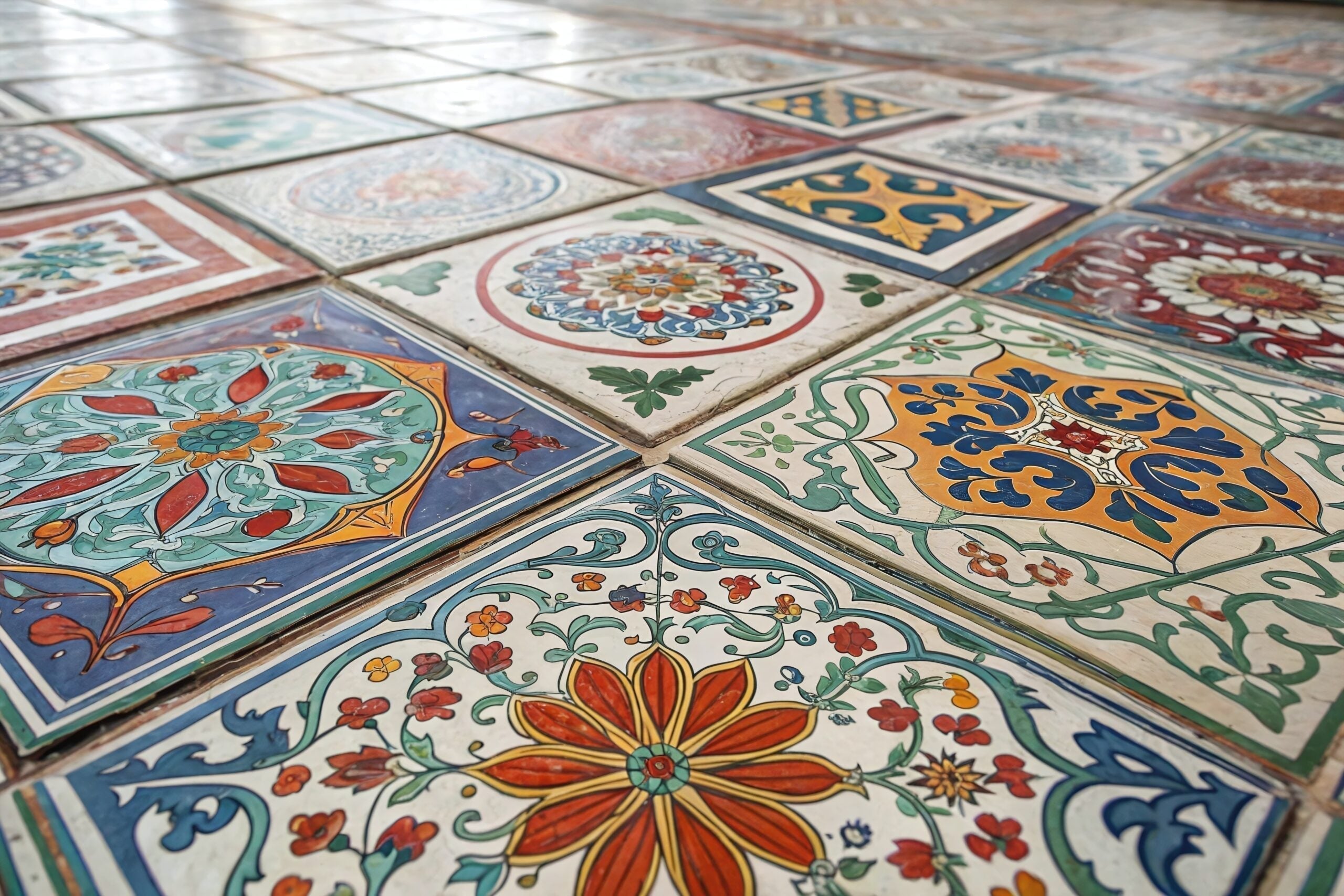
Moroccan mosaic tiles are unique, timeless, and instantly add ambiance to any room. From colorful patterns to exquisite craftsmanship, mosaic tiles are an art form in themselves. This guide will teach you everything you need to know about Moroccan mosaic tiles: from their origins to their application and maintenance. This will help you make an informed choice for your interior design project.
What are Moroccan mosaic tiles?
Moroccan mosaic tiles are handmade tiles known for their detailed patterns, deep colors, and centuries-old tradition. Each tile is hand-cut and carefully laid, often in geometric patterns that symbolize balance, harmony, and endless repetition. This artisanal quality makes Moroccan mosaic tiles not only special but also valuable. There is literally soul in every tile.
Unlike other types of mosaic—such as the sleek, machine-made glass or ceramic tiles you often see—Moroccan mosaic tiles are distinguished by their imperfections. And it is precisely these imperfections that create character. They are traditionally made from clay, which is first dried in the sun, then fired and glazed. The tiles are then hand-cut into specific shapes such as stars, crosses, diamonds, or clovers. These shapes are then assembled into a larger geometric pattern.
Moroccan mosaic tiles are unparalleled in their use of color. You often see deep hues like cobalt blue, emerald green, warm yellow, white, and black, often combined with natural color nuances created during the firing process. The result is a vibrant yet balanced visual effect.
It's not just the appearance that makes Moroccan mosaic tiles special. The techniques used—from cutting to laying—have also been passed down through generations. This process is called "Zellige," a form of mosaic art deeply rooted in Moroccan culture. Zellige involves meticulously placing the small pieces, also called tesserae , by hand to create a cohesive pattern.
Moroccan mosaic tiles are popular in both modern and classic interiors. In minimalist spaces, they create a striking accent, while in more traditional styles, they blend seamlessly into the overall look. They combine aesthetics with authenticity, making them a popular choice among architects, designers, and enthusiasts of unique interior design.
The history of Moroccan mosaic tiles
Moroccan mosaic tiles have a history that stretches back centuries. What began as a craft in Andalusia, through cultural and religious cross-pollination, found its way to cities like Fez and Marrakech. Here, the art of zellige developed: small pieces of colored clay, hand-cut and assembled into a larger whole. Each tile is carefully glazed, sun-dried, and fired in traditional kilns, just as it has been done for hundreds of years.
Islamic influences are clearly visible. Because figurative art was often prohibited in religious contexts, a focus on abstract patterns, symmetry, and geometry emerged. This visual language gained additional depth through the influence of Berber culture, which added its own forms, symbolism, and use of color. The result is a unique tile tradition that combines spirituality, mathematics, and aesthetics.
To this day, this craft is still carried out by hand in workshops in Morocco. This centuries-old method ensures that every tile tells a story. The small imperfections are not mistakes, but rather evidence of pure craftsmanship.
Uses of Moroccan mosaic tiles in the home
Moroccan mosaic tiles are not only a feast for the eyes but also surprisingly versatile. They fit effortlessly into a variety of spaces, whether you prefer a bold style or subtle accents.
In the bathroom, they create a warm and inviting atmosphere. Imagine a colorful shower wall or a floor that gives you a little holiday feeling every morning. The wall behind the sink is also perfect for these tiles; the pattern immediately adds character to the space.
In the kitchen, they work fantastically as a backsplash above the countertop, where they're not only beautiful but also practical. They're resistant to moisture and grease splatters, and they're easy to wipe clean. They also make a striking alternative to standard tile on the kitchen floor – stylish and durable.
When you walk into the hallway, you want to make a good impression right away. A floor with Moroccan mosaic tiles creates a warm welcome and is durable, ideal for a high-traffic area. In the living room, they can add a sophisticated touch, for example, as a cladding around the fireplace or as a small statement wall.
For those who enjoy a more creative approach, there are many more possibilities. Think of tabletops, steps, or even planters – places where you can add a lot of ambiance with relatively little tiling. This way, Moroccan mosaic tiles become not only functional but a real way to express your personal style in your home.
Moroccan mosaic tiles in the bathroom

Moroccan mosaic tiles are even suitable for damp rooms like bathrooms. Thanks to their glazed surface, they are water-resistant and highly resistant to temperature fluctuations. This makes them ideal for shower walls, bath surrounds, or even the entire floor.
One of the biggest advantages of Moroccan mosaic tiles in the bathroom is their unique appearance. No two tiles are alike, creating a warm and vibrant atmosphere. The glaze protects against moisture, but the grout requires extra attention. Choose a waterproof grout and ensure a good seal.
A minor drawback is that some traditional Moroccan mosaic tiles can be more porous than modern tiles. Therefore, seek expert advice when purchasing and consider additional treatment if you plan to use the tiles on your floor.
Moroccan mosaic tiles combine beautifully with concrete-look tiles, natural stone, or simple ceramic tiles. This creates a sense of balance: the mosaic draws the eye, while the subtle tiles create a sense of calm and unity.
Shades of blue and green are popular colors in bathrooms for their fresh, calming effect. Patterns like stars, herringbone, and geometric flowers are popular because they add movement to the design. Think of a deep blue backsplash with white accents – stylish and timeless.
For the floor, it's important to choose Moroccan mosaic tiles with a rougher texture or a matte finish. These provide more grip and reduce the risk of slipping. If in doubt, ask about the R-value (slip rating) and always ensure professionally installed grout.
The magic of colors and patterns
What makes Moroccan mosaic tiles truly special is their use of color and rich patterns. No other tile type creates such an impact with color and shape. They appeal to the senses and add character to any space.
Color is an essential part of Moroccan aesthetics. In Islamic culture—where this tile art is deeply rooted—each color has symbolism. Blue represents protection, green life, white purity, and black strength. These colors aren't chosen at random; they're meant to evoke a specific atmosphere.
The geometric patterns in Moroccan mosaic tiles often have a deeper meaning. Repeating shapes symbolize infinity and harmony—a reflection of the universe and the order within chaos. This makes Moroccan mosaic tiles not only decorative but also spiritually charged.
Color palettes: blue, green, terracotta, black and white
- Blue : Fresh and timeless. Perfect for bathrooms or outdoor spaces.
- Green : Brings peace and natural balance.
- Terracotta : Warm and earthy. Pairs beautifully with wooden accents.
- Black and white : Graphic and modern, without losing the charm of the craft.
A colorful tiled wall can carry an entire room. Choosing warm tones makes a room feel more intimate. Cool colors, on the other hand, create an airy, fresh feeling. In larger spaces, you can create depth with dark colors, while light tiles visually expand a space.
At Mozaïektegel.com you'll find a wide range of mosaic tiles and related products from renowned brands such as The Mosaic Factory, Stone Line, Stabigio, Terre d'Azur, Serenissima, DTG, JOS, Mapei, Vilar Albaro, Differenz, Ragno, Coba, Colorker, Atlas Concorde, and Beste Koop. You can find stylish wall tiles and floor tiles , practical solutions for applying stickers , and professional processing tools. You can count on high-quality workmanship that perfectly matches your interior or renovation project.
We collaborate with a number of reliable and passionate partners , including Deurbeslag -expert, Van Boxtel Interieurbouw, Tegen de Wand, MuurWerken, Whiteboard-expert.nl, geWOONSTIJL, LIONSHOME, and Wecho. Thanks to these partnerships, we can offer you not only high-quality products but also complete and well-thought-out solutions for every interior design project.
Moroccan mosaic tiles as floor tiles
Moroccan mosaic tiles are not only beautiful on the wall, but also surprisingly suitable as floor tiles. When properly laid and treated, they are durable, long-lasting, and can withstand daily use.
Thanks to the firing process and glaze, Moroccan mosaic tiles are scratch and wear resistant. This makes them ideal for high-traffic areas like kitchens, hallways, or even commercial settings. The only thing you need to pay attention to is proper installation: a good substrate and strong grout ensure a long lifespan.
Moroccan mosaic tiles can be installed on various substrates, as long as they are level and sturdy. Think of cement screeds, existing tiles (provided they are properly prepared), or even underfloor heating. Their thinness often makes them perfect for this.
Tiles reflect sound, but the joints between Moroccan mosaic tiles refract it slightly. This makes the acoustics more pleasant than with large, flat ceramic tiles. Moreover, the patterns and colors create a warm, inviting atmosphere – even in minimalist spaces.
Zellige tiles vs. Moroccan mosaic tiles: What's the difference?
Although the terms are often used interchangeably, Zellige tiles and Moroccan mosaic tiles are not the same. Both are handmade and come from Morocco, but differ significantly in shape, application, and appearance.
Zellige is a specific type of Moroccan tile, often square and glazed, known for its deep sheen and varied hues. They are made from clay from the Fez region and hand-carved. Each tile is unique—full of color nuances, imperfections, and character.
- Similarities : Both tile types are handmade, water-resistant, and rich in culture. They fit well in both modern and classic interiors.
- Differences : Zellige tiles are often solid-colored and smooth, while Moroccan mosaic tiles consist of small pieces that together form a pattern. Zellige is all about texture and color, mosaic about composition and symmetry.
Choose Zellige if you're looking for tranquility, color, and reflection. These tiles are perfect for kitchen walls or bathrooms with a calm, chic look. Moroccan mosaic tiles are ideal if you want to make a statement with patterns, for example, on the floor or an accent wall.
Many people combine Zellige with Moroccan mosaic tiles for a playful effect. Imagine a plain Zellige wall with a colorful mosaic floor underneath. This creates a harmony between tranquility and vibrancy.
Want to be sure you make the right choice for your tiling project? Our team at Mozaïektegel.com is ready to help you. Feel free to contact us for free, personalized advice. We're happy to help you find the perfect mosaic tiles and ensure the entire process runs smoothly and hassle-free, from your first question to final installation.
Moroccan Mosaic Tile Maintenance: Tips and Products

Moroccan mosaic tiles are strong and durable, but they do require proper maintenance to maintain their appearance for years to come. Fortunately, that's not complicated, as long as you know what to look for.
For daily maintenance, a soft cloth or mop combined with lukewarm water is often sufficient. Avoid using harsh cleaning agents or scouring pads, as they can damage the glaze. If you have a tiled floor, vacuuming with a soft brush attachment is ideal for removing dirt and sand.
Preferably use pH-neutral cleaners. Products specifically formulated for glazed tiles are safe for Moroccan mosaic tiles. Avoid anything containing acids or bleach, as these can dull the surface or cause discoloration.
Limescale buildup is especially a risk in wet areas like bathrooms. Dry the tiles after use with a soft cloth or squeegee. A natural solution like diluted cleaning vinegar can work, but always test it on a small, inconspicuous area first. And if in doubt, ask for advice, especially with handmade tiles.
The grout is often the weak point when it comes to moisture and dirt. Therefore, always choose a high-quality, water-repellent grout. For extra protection, you can also use an impregnating agent on both the tiles and the grout – especially when using it in the kitchen or bathroom. This will keep your Moroccan mosaic tiles beautiful and functional.
Combining Moroccan mosaic tiles with other materials
Moroccan mosaic tiles are real eye-catchers, but they can also be perfectly combined with other materials for a stylish look. Whether you prefer sleek modern or warm traditional – the possibilities are endless.
Concrete, wood, steel, natural stone
- Concrete : The raw, industrial character of concrete forms an exciting contrast with the refined pattern of Moroccan mosaic tiles.
- Wood : Warm wood types bring out the natural colours in the tiles and soften the whole.
- Steel : Especially in modern interiors, steel creates a bold, graphic look. Think of black steel doors next to a wall with colorful mosaic.
- Natural stone : Combine marble or travertine with subtle mosaic tiles for a luxurious, timeless look.
Let Moroccan mosaic tiles take center stage in a single spot. Create a sense of calm in the rest of the interior by coordinating materials and colors. Think in contrasts: colorful tiles against a white wall, or a calming mosaic next to a wooden countertop.
In modern interiors, Moroccan mosaic tiles are often combined with concrete, steel, and minimalist furniture. In more traditional settings, you'll find a lot of warm wood tones, vintage furniture, and earthy colors that complement the patterns beautifully.
Want to really go all out? Then choose a complete wall of Moroccan mosaic tiles as a statement piece. Prefer to keep things subtle? Then a simple base with a few accents—like a niche, backsplash, or fireplace surround—is a nice compromise.
Curious about what you can do with Moroccan mosaic tiles? Our knowledge base offers comprehensive information, practical tips, and helpful insights to help you make the right decisions. Be sure to also check out our frequently asked questions for quick answers to specific questions. This way, you'll always be well-prepared.
Common mistakes when choosing Moroccan mosaic tiles
While Moroccan mosaic tiles are very forgiving in terms of style, there are a few pitfalls that are best avoided.
Wrong combination of patterns
Mixing too many different patterns can look cluttered. Choose one main motif and keep the rest of the room calm, or work in zones with visual moments of calm.
Incorrect application in damp areas
Not all mosaic tiles are suitable for wet areas. Choose only glazed, water-resistant varieties and ensure they are installed and grouted correctly.
Forgetting about grout or sealant
Good grout is essential. It keeps moisture out and ensures your tiles stay firmly in place. Don't forget to use an impregnating agent where necessary.
Too little attention to maintenance
Without proper maintenance, even the most beautiful tiles can lose their shine. A simple cleaning routine and the right products really make a difference.
Want to buy top-quality Moroccan mosaic tiles?
Want to bring color, character, and craftsmanship into your home? With Moroccan mosaic tiles, you can create an interior that stands out and continues to inspire. At Mozaiektegel.com, we're happy to help with personalized advice, samples, custom work, and complete solutions. Discover the power of real mosaic. Your project deserves it.
Business customers can register with Register for free at Mozaïktegel.com and enjoy attractive benefits, such as sharp discounts, extra service, and fast delivery. We offer a wide range of high-quality products and make it easy to order tile samples. of almost our entire selection. This way, you can take your time to explore the materials before making a final decision.
Curious what our tiles look like in real life? Visit our showroom in Volkel and discover a wide selection that will provide plenty of inspiration for your business project. We're open Monday through Friday from 8:00 AM to 8:00 PM, and Saturdays from 9:00 AM to 3:30 PM. For questions or personalized advice, feel free to contact us – we're happy to help, without any obligation.


