

In this article, we'll address the question: how do you install mosaic tiles? Two important questions to consider beforehand are:
- How do you measure the surface area? This way you can be sure you order the correct quantity.
- Are you going to install the tiles yourself, or will you have an expert do it? (Our advice: have an expert do it for optimal results.)
We always recommend having your mosaic tiles installed by a tiler for the best results. For more tips, such as choosing a good tiler, read the previously linked article. If you're planning to install the tiles yourself, you'll find a good installation (and grouting) guide on this page. Before you begin, carefully read all the steps, and also read the additional tips, as they can be crucial in some cases.
We recommend that you have the tiles installed by a tiler
Choose sealant, grout and adhesive
Almost every tiler has a preference for the brand of adhesive, grout, and sealant they use. However, always inquire whether the tiler's preferred materials are also suitable for use in wet areas such as showers, swimming pools, and kitchen backsplashes. This requires a completely sealed grout, which also prevents the grout from becoming dirty over time.
Supplies
For this job you will need:
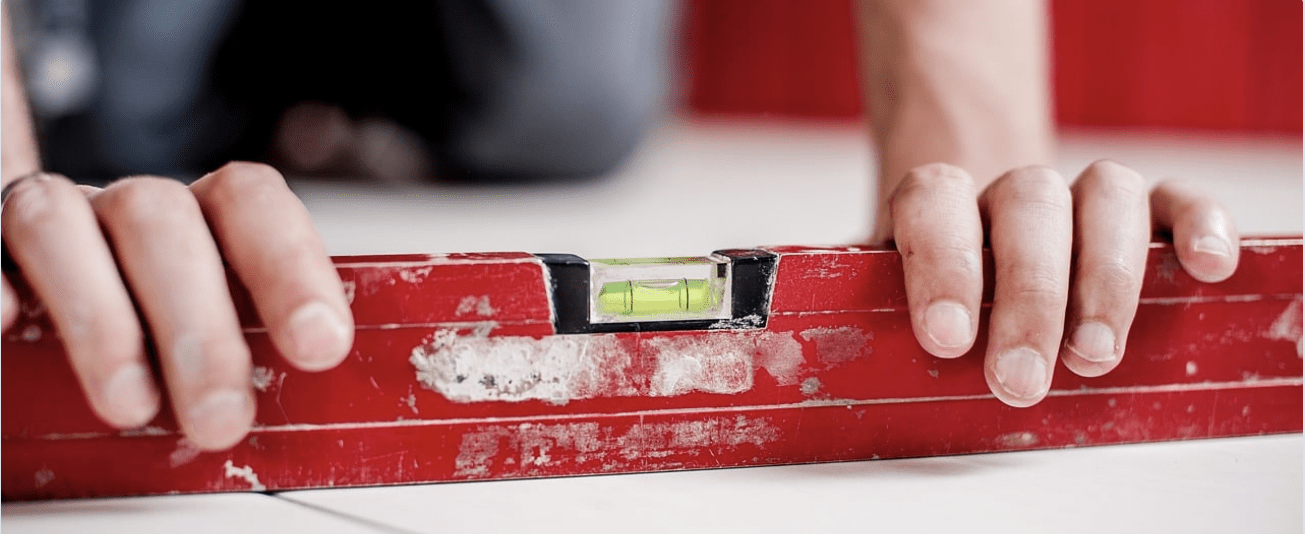
- Spirit level
- Glue comb
- Sponge
- Safety glasses
- Face mask
- Mosaic tiles
- Glue
- Grout
- Kit
Installing mosaic tiles
- The surface must be completely flat, clean and dry.
- Choose adhesive based on the substrate and application. For the best information, check the manufacturer's website or ask a salesperson at the hardware store where you plan to buy the adhesive. Manufacturers with good adhesives include Eurocol, Mapei, PCI, and Sopro. This is just a small selection of the available good adhesives. We do not offer adhesives in our store.
- Working with glass mosaic tiles ? Make sure you have a clean white base and use only white adhesive. This prevents the mosaic from turning out differently than you want and expect.
- Now apply the adhesive using a notched trowel. Ideally, use one with the smallest possible notch. Start in the center of the space and work outward. Apply a generous amount of adhesive. The adhesive should be spread using a circular motion. The mosaic should be placed on the adhesive before it hardens.
- Place the first sheet of tiles straight and centered on the surface. Use a trowel to press each tile into place. All tiles must be in good contact with the adhesive to ensure they stay in place. If adhesive oozes out from between the grout lines, too much adhesive has been used. Remove the excess adhesive, otherwise, grout cannot be applied in these areas.
- Attach the next sheet approximately one-third of the way down from the first. This can be next to or underneath. The idea is for the sheets to be slightly offset, so that the final result is a single piece. Try to maintain the same joint width as much as possible.
- After a while, you'll reach the edges of the space. For this, it's often important to cut the sheets to size. In this article, we'll explain more about cutting and trimming mosaic tiles. In short: you cut glass mosaic tiles, you cut ceramic tiles . Special tile tools are required for cutting and trimming. Besides cutting, ceramic tiles can also be sawn with a table saw. Note: make sure you only need to cut the top or bottom, not both sides.
- Once the entire surface (wall or floor) is finished, the adhesive needs to cure thoroughly. Once this is done, you can begin grouting. Choose a grout suitable for the application and choose a color that complements the mosaic tiles. We also recommend the same brands for grout.
The adding
Begin grouting once you've completed the steps for Installing Mosaic Tiles . Read these grouting steps carefully before starting. Once you've covered the entire surface, the adhesive needs to cure thoroughly. Then you can begin grouting. Choose a grout suitable for the application (wall, floor, pool, etc.). Also, choose a color that complements the mosaic tiles. We recommend purchasing the same brand of grout and sealant to ensure the colors match as closely as possible.
- Always mix grout with a mixer, not a trowel. This reduces the amount of water needed, ensuring the grout dries to the correct color.
- Mix the grout according to the instructions on the package. Spread it over the surface. Use a trowel to spread it.
- Check that all joints are properly filled with grout. Be careful not to leave any air bubbles or gaps.
- Once the grout is thoroughly dry, you can start polishing. Check the grout packaging for the drying time. Use a sponge and plenty of water for polishing.
Additional tips for placing and grouting – read these tips beforehand
- Do not use white grout for the floor.
- For wet, damp areas or kitchen backsplashes, use a completely sealed joint. This is for maintenance and hygiene reasons.
- Once you've thoroughly sponged the surface with clean water, the tile installation is complete. If a film or haze remains, we have the following tips:
- With an epoxy joint or 2-component joint, you can remove the last veil with methylated spirits.
- If any cement remains in the glass mosaic's recesses, and the grout lines aren't completely smooth, use a cement residue remover. Don't wait too long to do this, though!
- Finally, the sealant. We recommend using the same color as the grout. This ensures the color matches the grout as closely as possible, creating a cohesive look. Therefore, use the same brand of sealant as the grout.
Mosaic tile DIY guide


